
• Skip to primary navigation
  • Skip to main content
  • Skip to footer
Prior Scientific

Prior Scientific

Experts in Precision Positioning and Microscope Automation

  • Products
    • Automated Imaging Systems
      • OpenStand-U
      • OpenStand-M
      • OpenStand-L
      • OpenStand-V
    • Imaging Components
      • Motorized Stages
      • Focus Mechanisms
      • Laser Autofocus
      • Filter Wheels, Turrets & Shutters
      • Controllers & Joysticks
      • Robotic Sample Loaders
      • Physiology Platforms
      • Motorized Vertical Stages
    • Microscope Automation
      • Evident Olympus Microscope Automation
      • Nikon Microscope Automation
      • Leica Microscope Automation
      • Zeiss Microscope Automation
      • Automated Custom Imaging Systems
      • Other Microscope Brands
    • Nanopositioning Devices
    • Vibration Control
    • Custom Solutions & Contract Manufacturing
  • About
  • Applications
  • Blog
  • Contact Us
  • News
  • Technical Support
  • US Shop
  • 日本語
    • English
    • Deutsch
    • United States
    • 简体中文
  • Automated Imaging Systems
    • OpenStand-L
    • OpenStand-M
    • OpenStand-U
    • OpenStand-V
  • Imaging Components
    • Motorized Stages
    • Focus Mechanisms
    • Laser Autofocus
    • Filter Wheels, Turrets & Shutters
    • Controllers & Joysticks
    • Robotic Sample Loaders
    • Physiology Platforms
    • Motorized Vertical Stages
  • Microscope Automation
    • Evident Olympus Microscope Automation
    • Nikon Microscope Automation
    • Leica Microscope Automation
    • Zeiss Microscope Automation
    • Automated Custom Imaging Systems
    • Other Microscope Brands
  • Nanopositioning Devices
  • Vibration Control
  • Custom Solutions & Contract Manufacturing
Home » Blog » How to care for your automated microscope stages

How to care for your automated microscope stages

23.11.22

Maintain the efficiency of motorized microscope stages

Our precision microscope automation and nanopositioning systems are manufactured to the highest standards. They are backed by comprehensive technical support, repair services and warranties, so that if you have a question about initial setup or subsequent use you can be sure of a fast and effective resolution. In addition, there are several simple steps that you can take to improve the operation and longevity of your stages still further.


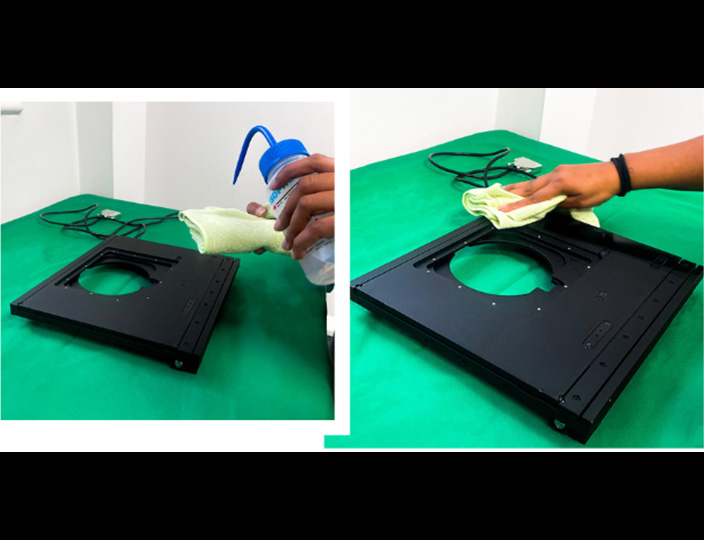
Perhaps the easiest but often forgotten action is to follow a regular cleaning regime. This does not need to be complicated or particularly time consuming but will help to ensure that precision positioning mechanisms and sensing devices function correctly at all times. Using a 70% ethanol solution applied on a lint-free pad to the external surfaces is all that is normally required, while ensuring that any spillages or other contamination are removed promptly. For customers with older stages, it’s worth bearing in mind that it is possible for degraded grease to accumulate on ballscrews. This grease needs to be periodically cleaned and the ballscrew regreased. The work can be carried out either by returning the microscope automation unit to our service department or on-site by a suitably experienced technician; if this work is done by a member of your staff then it is important to follow the correct cleaning instructions, which are available from our service team.

A further area where we occasionally see issues occur is with high-speed linear stages. Problems can arise if wires such as the stage and encoder cables are constrained. This can cause positioning errors and potentially result in the controller shutting down the motor to the axes. To prevent possible problems, ensure that all the cables attached to the stage have sufficient slack to eliminate any force or tension being applied to the stage.

Additionally, our linear stages have a high magnetic field around them so should be appropriately shielded if other magnetic equipment is being used in the immediate vicinity of the stage.

Repair and servicing of microscope automation stages

Even with the best care during use, sometimes one of our microscope automation stages will need a repair by our engineering team. The first step is to let us know about the fault using our RMA form.

We’ll explain how to remove the stage safely from the microscope and pack it correctly for shipping. Once we’ve received the item, we aim to carry out repairs within one to two weeks, although this is dependent on the workload at the time. We’ll initially inspect and test the unit to identify the fault. Once this has been rectified we put the unit through a comprehensive series of tests, running over 500 cycles at its default settings, to confirm that factors such as accuracy and repeatability are within specification. We’ll then produce a test report, which is returned to you with the repaired unit.

When you receive your stage back make sure that you adhere to the unpacking and setup guidelines. In particular, remember to remove the transit bolts (if they have been fitted), which prevent the plates within each stage moving during shipping, and do not apply excessive force during removal as this can potentially distort the plates. When installing the stage on a microscope or optical table ensure that the holding bolts are torqued down evenly, one at a time, and tighten the bolts in sequence across the diagonal axes.

Note that the transit bolts are the only fixings that are usually intended to be removed by the end-user. All other fixings, such as the screws securing the top plate, should normally be left in-situ and not be adjusted, as this may result in the stage being out of specification and affect your warranty.

If the limit switch needs to be adjusted, or the drive cover dissembled, then please contact our technical team for instructions. Once installed, you should run the stage at its default settings to check that it is operating correctly before using it for the first time; again, if settings need to be changed our technical team is on hand to talk you through the process and ensure that you’re ready to continue your research or laboratory work.

Our microscope automation systems are precision instruments. They are designed to operate reliably, accurately and consistently for extended periods. In common with all such devices their performance is ultimately determined by the way in which they are used and cared for. Our service team will provide considerable support and assistance, but with a few simple and common-sense measures you can improve levels of performance, efficiency and operating life of your stages still further. Contact our service team to learn more.
 

More Blogs
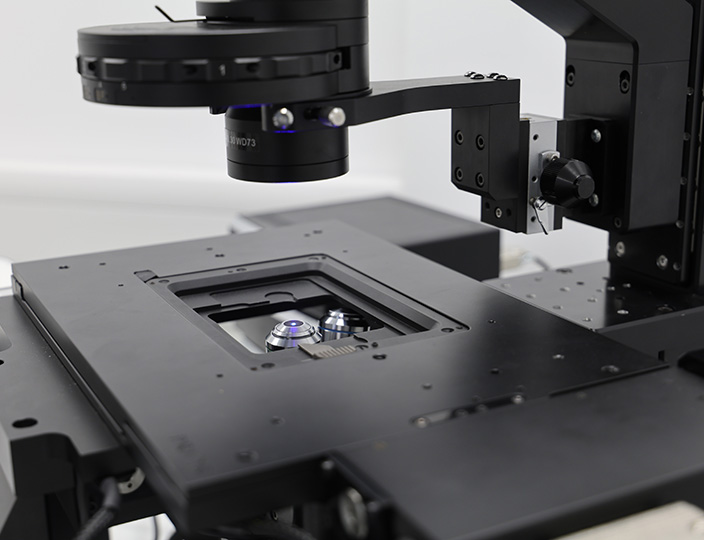
Close up of a motorized xy stage on an OpenStand-V inverted imaging platform. imaging platform 27.07.26

Microscopy and Precision Positioning Glossary: Terms, Definitions and Industry Guide

Learn More
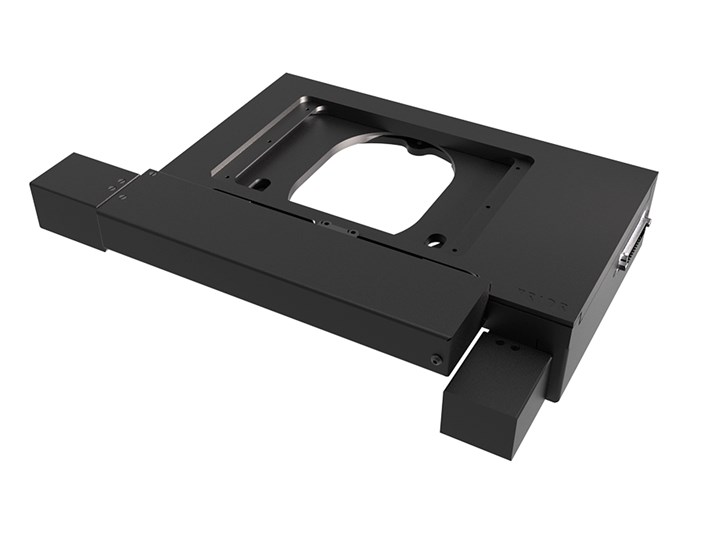
H100A compact precision motorized XY stage for upright microscopes 15.06.26

H100A Compact Motorized XY Microscope Stage for Precision Microscopy: Product Manager Q&A

Learn More
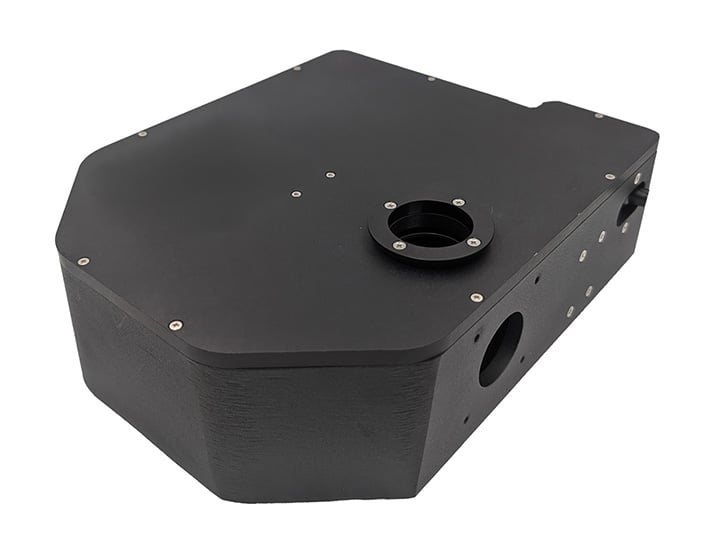
Three quarters view of the Prior motorized filter cube turret for multi-colour fluorescence imaging. 13.05.26

How a motorized filter cube turret expands microscope performance across advanced imaging workflows

Learn More
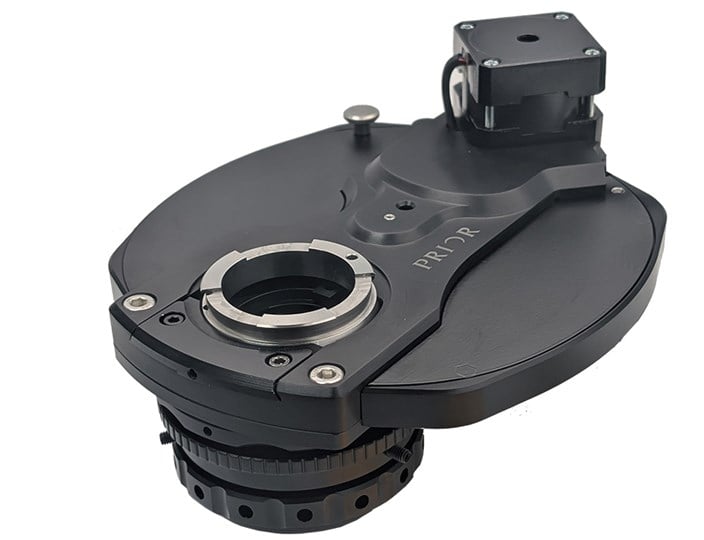

HF108B Filter Wheel: High‑Speed Fluorescence Imaging for Automated Microscopy Systems 21.04.26

HF108B Filter Wheel: High‑Speed Fluorescence Imaging for Automated Microscopy Systems

Learn More

Footer

Products

  • Automated Imaging Systems
  • Imaging Components
  • Microscope Automation
  • Nanopositioning Devices

Company

  • Custom Solutions & Contract Manufacturing
  • Applications
  • Technical Support
  • Careers

Resources

  • About
  • Blog
  • News
  • Contact Us

    Sign up to stay in the know...

    ✉

    Connect with us

    Prior Scientific Instruments Ltd.
    Units 3-4 Fielding Industrial Estate
    Wilbraham Road, Fulbourn
    Cambridge, CB21 5ET, UK

    inquiries@prior.com
    +44 (0)1223 881711

    Prior Scientific Inc.
    80 Reservoir Park Drive
    Rockland, MA. 02370
    U.S.A.

    info@prior.com
    +1 781 878 8442

    Prior Scientific Instruments GmbH
    Maria-Pawlowna-Str. 4
    07743 Jena
    Germany

    jena@prior.com
    +49 (0)3641 242 010

    Prior Scientific KK
    Kayabacho 3rd Nagaoka Bldg 10F,
    2-7-10, Nihonbashi Kayabacho
    Chuo-Ku, Tokyo 103-0025, Japan

    info-japan@prior.com
    +81 (0)3 5652 8831

    Prior Scientific Instruments (Suzhou) Ltd.
    Room 118, Meilihua Hemu Park,
    No. 393 Suhong Middle Road,
    Suzhou Industrial Park,
    Suzhou, 215000, China

    info-china@prior.com
    +86 (0)512 6617 5866

    Copyright © 2026 · Prior Scientific. Terms & Conditions | Privacy Policy | Impressum

    Manage Consent
    To provide the best experiences, we use technologies like cookies to store and/or access device information. Consenting to these technologies will allow us to process data such as browsing behavior or unique IDs on this site. Not consenting or withdrawing consent, may adversely affect certain features and functions.
    Functional Always active
    The technical storage or access is strictly necessary for the legitimate purpose of enabling the use of a specific service explicitly requested by the subscriber or user, or for the sole purpose of carrying out the transmission of a communication over an electronic communications network.
    Preferences
    The technical storage or access is necessary for the legitimate purpose of storing preferences that are not requested by the subscriber or user.
    Statistics
    The technical storage or access that is used exclusively for statistical purposes. The technical storage or access that is used exclusively for anonymous statistical purposes. Without a subpoena, voluntary compliance on the part of your Internet Service Provider, or additional records from a third party, information stored or retrieved for this purpose alone cannot usually be used to identify you.
    Marketing
    The technical storage or access is required to create user profiles to send advertising, or to track the user on a website or across several websites for similar marketing purposes.
    • Manage options
    • Manage services
    • Manage {vendor_count} vendors
    • Read more about these purposes
    View preferences
    • {title}
    • {title}
    • {title}