
• Skip to primary navigation
  • Skip to main content
  • Skip to footer
Prior Scientific

Prior Scientific

Experts in Precision Positioning and Microscope Automation

  • Products
    • Automated Imaging Systems
      • OpenStand-U
      • OpenStand-M
      • OpenStand-L
      • OpenStand-V
    • Imaging Components
      • Motorized Stages
      • Focus Mechanisms
      • Laser Autofocus
      • Filter Wheels, Turrets & Shutters
      • Controllers & Joysticks
      • Robotic Sample Loaders
      • Physiology Platforms
      • Motorized Vertical Stages
    • Microscope Automation
      • Evident Olympus Microscope Automation
      • Nikon Microscope Automation
      • Leica Microscope Automation
      • Zeiss Microscope Automation
      • Automated Custom Imaging Systems
      • Other Microscope Brands
    • Nanopositioning Devices
    • Vibration Control
    • Custom Solutions & Contract Manufacturing
  • About
  • Applications
  • Blog
  • Contact Us
  • News
  • Technical Support
  • US Shop
  • United States
    • English
    • Deutsch
    • 日本語
    • 简体中文
  • Automated Imaging Systems
    • OpenStand-L
    • OpenStand-M
    • OpenStand-U
    • OpenStand-V
  • Imaging Components
    • Motorized Stages
    • Focus Mechanisms
    • Laser Autofocus
    • Filter Wheels, Turrets & Shutters
    • Controllers & Joysticks
    • Robotic Sample Loaders
    • Physiology Platforms
    • Motorized Vertical Stages
  • Microscope Automation
    • Evident Olympus Microscope Automation
    • Nikon Microscope Automation
    • Leica Microscope Automation
    • Zeiss Microscope Automation
    • Automated Custom Imaging Systems
    • Other Microscope Brands
  • Nanopositioning Devices
  • Vibration Control
  • Custom Solutions & Contract Manufacturing
Home » Blog » What is nanopositioning?

What is nanopositioning?

08.12.22

Nanopositioning technology and where it’s used

Nanopositioning is the technology of moving, measuring and positioning a device or instrument to sub-micron levels of accuracy. By definition, this means movement over extremely small distances, often at high speeds; for example, in nanopositioning terms, a movement device that travels 1.0 mm is considered to be operating at the extremes of the technology. More usually, a nanopositioning system will be designed to produce repeatable, high precision movement in increments of one nanometer or less, over a distance of a few microns. A nanopositioning system is typically used to move and position devices such as a tools, probes, sensors or scanners. In each case, the requirement is normally to move the device to a set position and hold it precisely in place for extended periods, or to position, briefly hold and then reposition the device multiple times at high speeds.

Where are nanopositioning systems used?

The ability of nanopositioning systems to move rapidly yet consistently achieve nanometer levels of accuracy makes them ideal for a wide range of precision laboratory, research and manufacturing applications. These include high performance linear stages used in the production of read/write heads in computer hard drives; medical devices such as laser mirror positioning in eye surgery, live cell imaging, DNA sequencing and multi-photon microscopes for neurosciences; and atomic force microscopy used in materials research.

How does a nanopositioning system work?

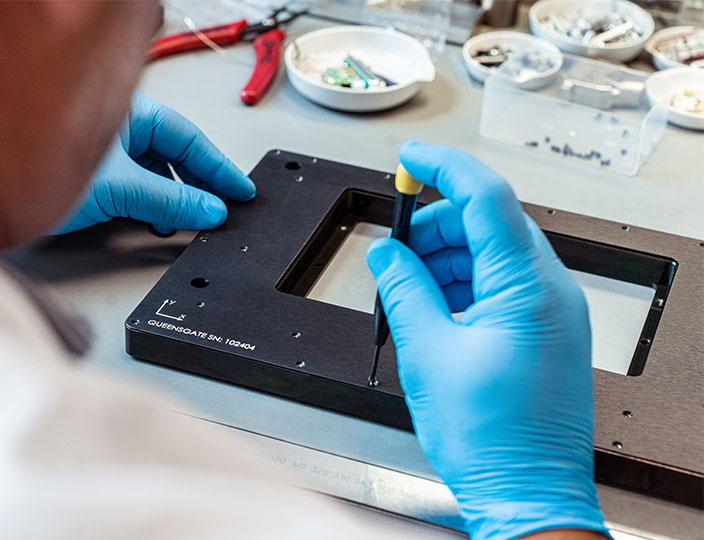
Although a nanopositioning system can be constructed in a number of ways, the most effective – and that pioneered by Queensgate, a brand of Prior Scientific – is based on proven piezoelectric technology. The piezoelectric effect was originally discovered by Jacques and Pierre Curie in 1880. They found that when a mechanical force was applied to quartz or other crystals it generated an electric charge within the crystal. They were also able to show that an electrical field caused the crystal to expand or contract; this subsequently became known as the inverse piezoelectric effect. A nanopositioning system exploits this phenomenon, using an electric signal to energize a stack of piezoelectric layers that expand in response to an applied voltage. By fixing one side of the mechanism to a reference base plate, or stage, while allowing the other to move, it is possible to create a linear actuator capable of sub-atomic resolution with extremely high mechanical stiffness. As an example, a piezoelectric stack that is 20mm in length might typically have 200 layers, each 100 microns thick. For each 100 volts applied, the stack would expand by 15 microns and be able to generate a force of around 750N. The inherently high degree of stiffness results in correspondingly high resonant frequencies, enabling devices to move rapidly in a controlled manner. Piezoelectric devices are, however, non-linear and exhibit hysteresis. They therefore require an external sensor to control their exact position. This is achieved using a capacitance sensor, which comprises two thin conducting films approximately 500 microns apart and separated by a dielectric air gap to give a set capacitance value. Attaching one side of the sensor to the moving stage of the nanopositioning device and the other to the fixed stage allows any movement to be detected as a change in capacitance. Using this measurement as input to a feedback control loop enables the exact position of the moving stage to be determined, with exceptional resolution, linearity, stability and repeatability. The system is completed with the addition of specially machined flexures, designed to guide each axis of motion, together with mechanical amplifiers and associated sensing and control electronics, creating a device that can make pure orthogonal motions with sub-nanometer levels of precision.

The nanopositioning experts

At Queensgate we have been designing, developing and manufacturing advanced nanopositioning systems for almost 50 years. We operate at the forefront of research into the science of sub-atomic movement, measurement and positioning, and have pioneered and perfected the application of piezoelectric and capacitance sensing technologies. Our systems are used around the world in sectors ranging from research, scientific and medical, to electronics and industrial, giving us unrivaled knowledge and experience – knowledge and experience that makes us the go-to experts in nanopositioning. Contact our technical sales team to learn more.
 

More Blogs
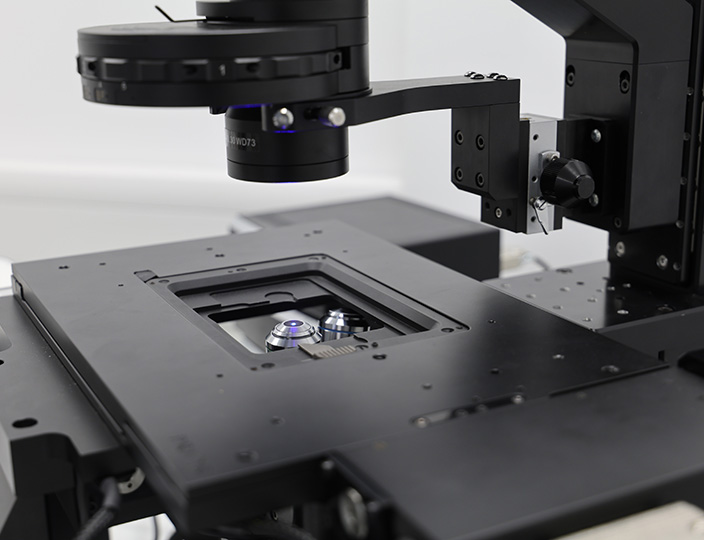
Close up of a motorized xy stage on an OpenStand-V inverted imaging platform. imaging platform 27.07.26

Microscopy and Precision Positioning Glossary: Terms, Definitions and Industry Guide

Learn More
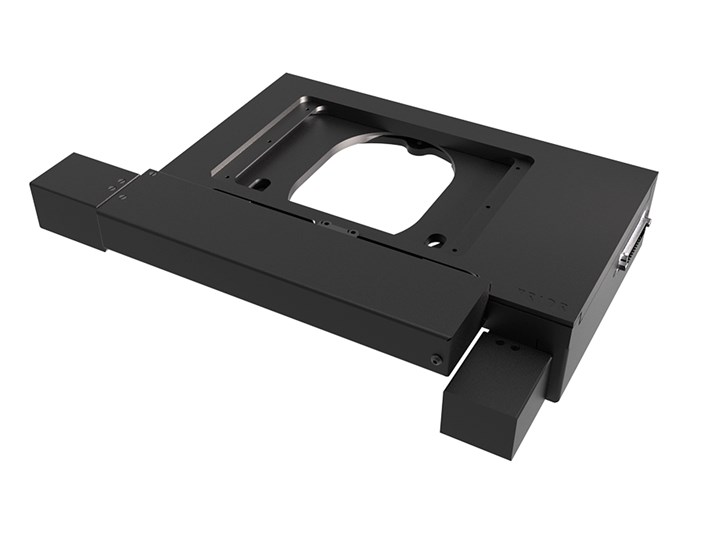
H100A compact precision motorized XY stage for upright microscopes 15.06.26

H100A Compact Motorized XY Microscope Stage for Precision Microscopy: Product Manager Q&A

Learn More
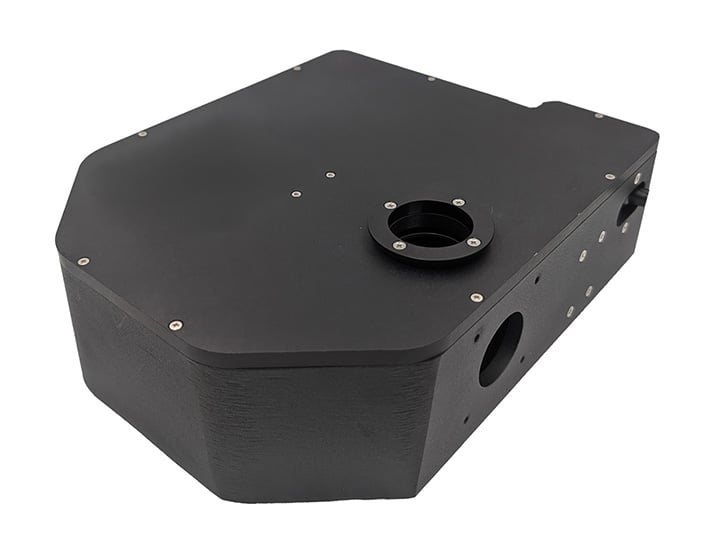
Three quarters view of the Prior motorized filter cube turret for multi-colour fluorescence imaging. 13.05.26

How a motorized filter cube turret expands microscope performance across advanced imaging workflows

Learn More

HF108B Filter Wheel: High‑Speed Fluorescence Imaging for Automated Microscopy Systems 21.04.26

HF108B Filter Wheel: High‑Speed Fluorescence Imaging for Automated Microscopy Systems

Learn More

Footer

Products

  • Automated Imaging Systems
  • Imaging Components
  • Microscope Automation
  • Nanopositioning Devices

Company

  • Custom Solutions & Contract Manufacturing
  • Applications
  • Technical Support
  • Careers

Resources

  • About
  • Blog
  • News
  • Contact Us

    Sign up to stay in the know...

    ✉

    Connect with us

    Prior Scientific Instruments Ltd.
    Units 3-4 Fielding Industrial Estate
    Wilbraham Road, Fulbourn
    Cambridge, CB21 5ET, UK

    inquiries@prior.com
    +44 (0)1223 881711

    Prior Scientific Inc.
    80 Reservoir Park Drive
    Rockland, MA. 02370
    U.S.A.

    info@prior.com
    +1 781 878 8442

    Prior Scientific Instruments GmbH
    Maria-Pawlowna-Str. 4
    07743 Jena
    Germany

    jena@prior.com
    +49 (0)3641 242 010

    Prior Scientific KK
    Kayabacho 3rd Nagaoka Bldg 10F,
    2-7-10, Nihonbashi Kayabacho
    Chuo-Ku, Tokyo 103-0025, Japan

    info-japan@prior.com
    +81 (0)3 5652 8831

    Prior Scientific Instruments (Suzhou) Ltd.
    Room 118, Meilihua Hemu Park,
    No. 393 Suhong Middle Road,
    Suzhou Industrial Park,
    Suzhou, 215000, China

    info-china@prior.com
    +86 (0)512 6617 5866

    Copyright © 2026 · Prior Scientific. Terms & Conditions | Privacy Policy | Impressum

    Manage Consent
    To provide the best experiences, we use technologies like cookies to store and/or access device information. Consenting to these technologies will allow us to process data such as browsing behavior or unique IDs on this site. Not consenting or withdrawing consent, may adversely affect certain features and functions.
    Functional Always active
    The technical storage or access is strictly necessary for the legitimate purpose of enabling the use of a specific service explicitly requested by the subscriber or user, or for the sole purpose of carrying out the transmission of a communication over an electronic communications network.
    Preferences
    The technical storage or access is necessary for the legitimate purpose of storing preferences that are not requested by the subscriber or user.
    Statistics
    The technical storage or access that is used exclusively for statistical purposes. The technical storage or access that is used exclusively for anonymous statistical purposes. Without a subpoena, voluntary compliance on the part of your Internet Service Provider, or additional records from a third party, information stored or retrieved for this purpose alone cannot usually be used to identify you.
    Marketing
    The technical storage or access is required to create user profiles to send advertising, or to track the user on a website or across several websites for similar marketing purposes.
    • Manage options
    • Manage services
    • Manage {vendor_count} vendors
    • Read more about these purposes
    View preferences
    • {title}
    • {title}
    • {title}